SODIUM ANALYSIS (SWEAT ANALYSIS) – OPTIMIZE YOUR SALT INTAKE FOR PERFORMANCE AND FLUID BALANCE
Drinking the right amount of water is not always enough. In order for the body to absorb and retain fluid, the right amount of sodium is required. With a sodium analysis (sweat analysis), you will know in black and white how much salt you need – and can thus optimize both performance and recovery.
WHY SODIUM IS CRITICAL TO YOUR PERFORMANCE
Sodium plays a central role in the body's fluid balance. Without enough sodium, the body cannot effectively absorb fluid into the bloodstream. This means you can drink large amounts without actually becoming hydrated.
This is why many people experience “dehydration” even though they drink a lot – the problem is often fundamentally a sodium deficiency.
With low sodium levels, you may experience:
- That your thirst is not quenched even though you drink
- That you pee often
- Decreased performance
- Increased risk of cramps and fatigue
In extreme cases, sodium deficiency can become serious and affect the functioning of the entire body.

INDIVIDUAL DIFFERENCES – WHY STANDARD RECOMMENDATIONS ARE NOT ENOUGH
One of the most important insights is that sodium needs vary greatly between individuals.
The average is around 950 mg of sodium per liter of sweat – but the range is enormous:
- As little as 200 mg/l
- Up to 2500 mg/l
This means that two people who train together may have completely different needs, despite the same amount of training and conditions.
In addition, the need is strongly influenced by:
- Temperature (heat → increased sweating)
- Training duration
- Intensity
- Heat adaptation
Research shows that it is primarily the amount of sweat that changes during heat adaptation, while the sodium concentration in sweat is relatively stable over time, meaning that one measurement is sufficient to determine your individual needs.
HOW A SODIUM ANALYSIS IS PERFORMED
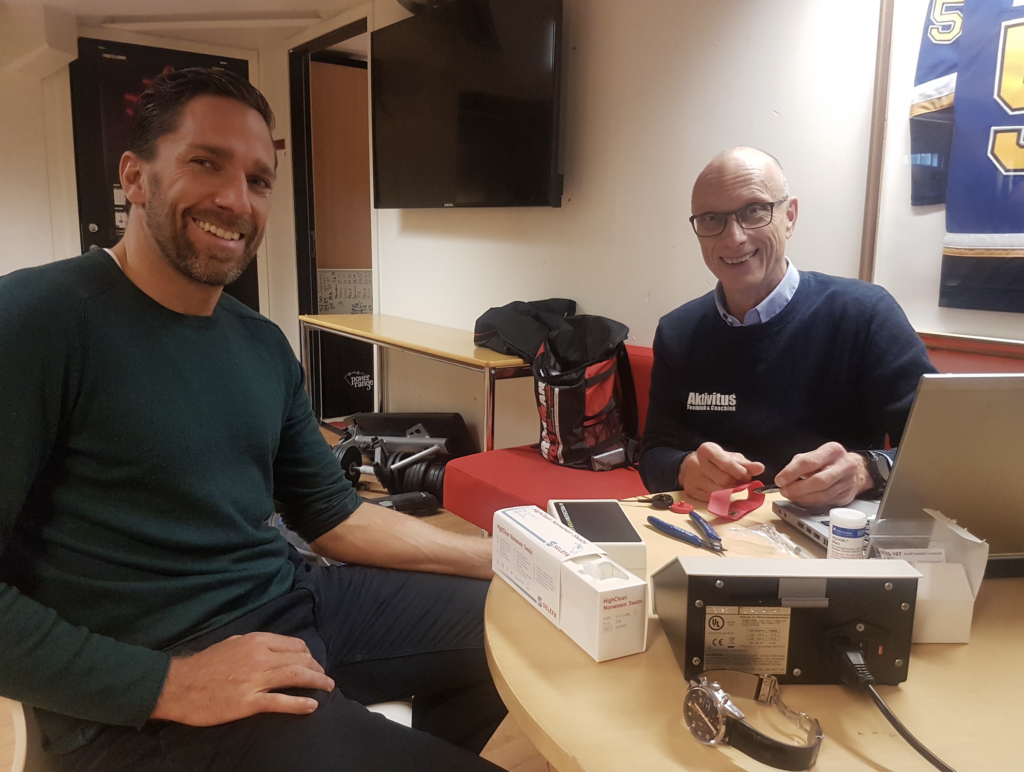
The test is quick, simple and completely non-invasive.
- Time required: about 15–25 minutes
- Performed with medically graded equipment
- Electrodes stimulate local sweating on the skin
- The sweat is collected and analyzed
You will get an immediate answer to your individual sodium concentration in mg/l of sweat.
HOW TO USE YOUR RESULTS IN PRACTICE
The results of the sodium analysis make it possible to precisely adjust your salt intake to your fluid metabolism.
Example:
An athlete normally metabolizes 3–5 liters of fluid per day.
During a training camp or competition, this can increase to 10–12 liters.
This means that:
- You need to compensate for the extra fluid
- And thus also for the sodium loss
With your individual value (mg/l), you can calculate exactly how much sodium you need to add.
FROM DATA TO CONCRETE STRATEGY
Knowing your need is one thing – using it correctly is another.
Therefore, it always includes:
- Interpretation of your results
- Recommendations for training and competition
- Advice on sports drinks, gels and salt supplements
Most energy products contain sodium, but the amount varies. For some it is enough – for others, supplementation with extra salt is required.
WHO IS SODIUM ANALYSIS SUITABLE FOR?
Sodium analysis is particularly valuable for those who:
- Trains endurance sports (running, cycling, triathlon, skiing)
- Competes for a longer period of time (over 1–2 hours)
- Training or competing in the heat
- Sweats a lot or gets salt streaks on clothes
- Have had problems with cramps, energy dips or fluid balance
BALANCE BETWEEN HEALTH AND PERFORMANCE
In everyday life, a limited salt intake is often recommended, especially for people with high blood pressure or other risk factors.
But for those who train hard – especially in the heat or for a long time – the conditions change completely.
Then it's not about reducing salt, but about optimizing it.
SUMMARY – MEASURING IS KNOWING
With a sodium analysis you get:
- Your exact sodium requirement per liter of sweat
- Better fluid absorption and more stable performance
- Reduced risk of cramps and energy dips
- A concrete strategy for training and competition
One measurement is enough to gain knowledge that you can use for the rest of your training career.